Last updated November 21, 2026
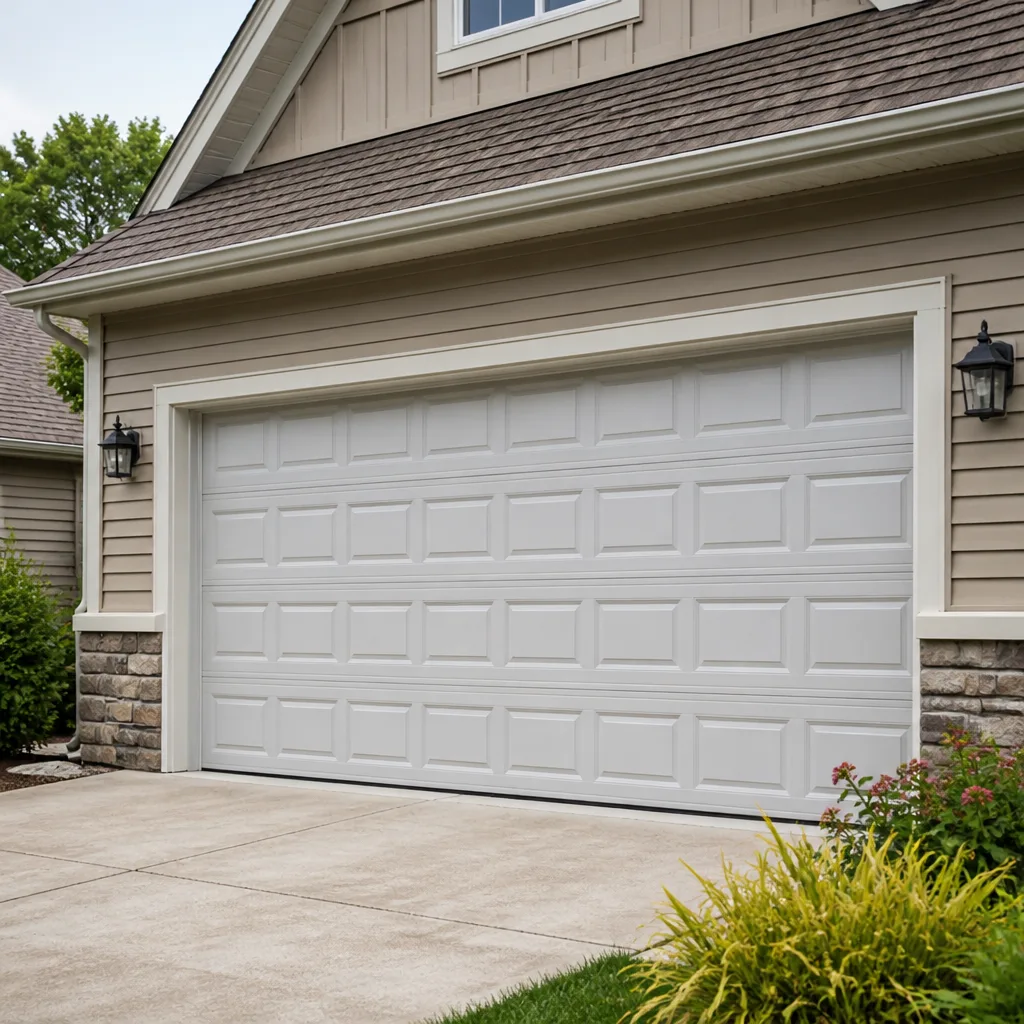 Raised-panel steel
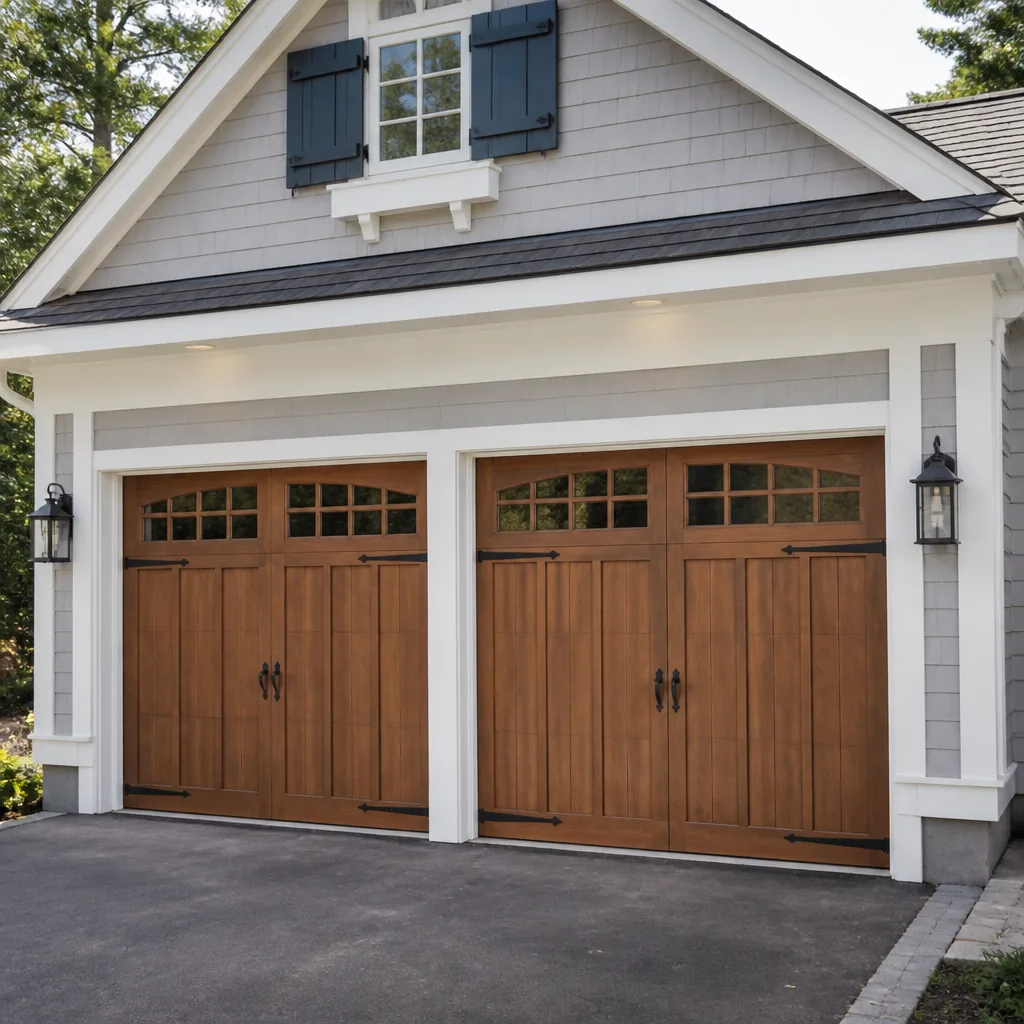 Carriage house
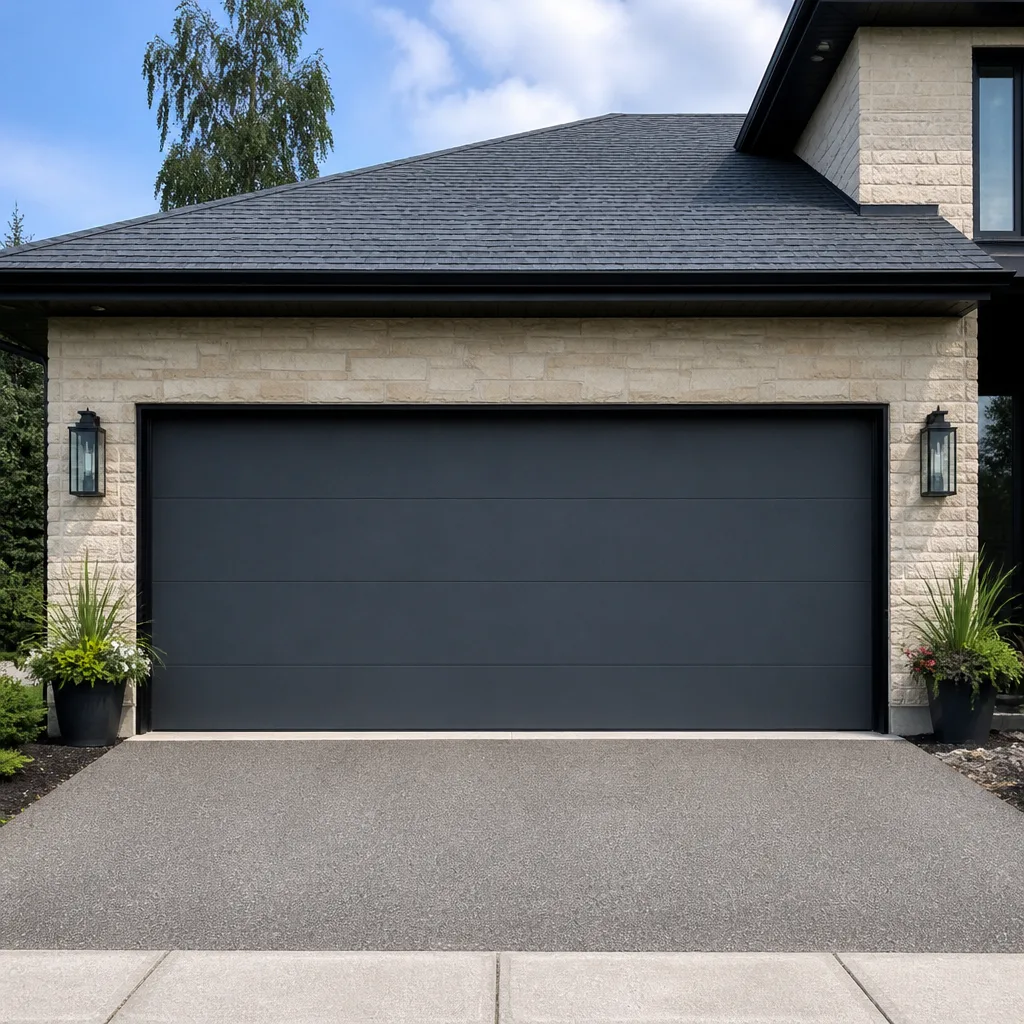 Modern flush
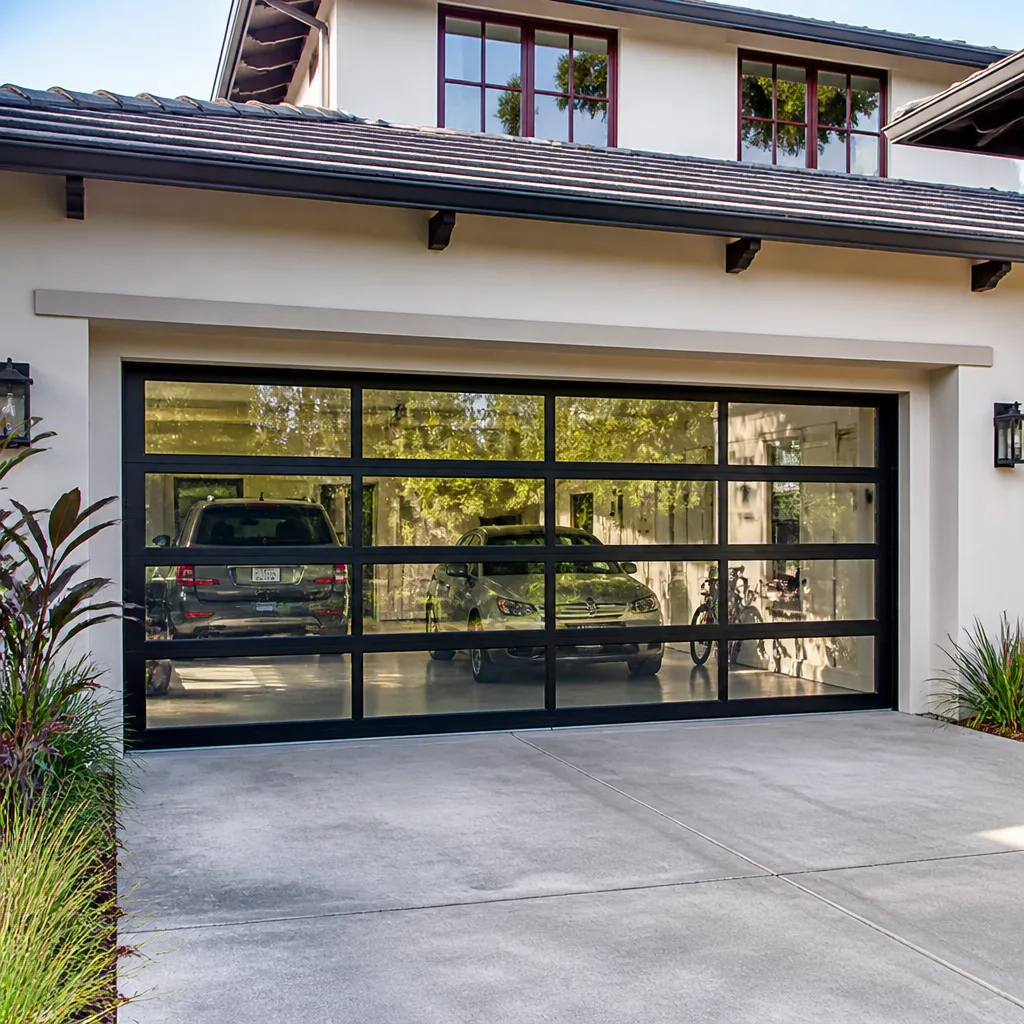 Full-view glass
 LiftMaster openers
 Chamberlain openers
Full 25-point door and opener safety check with every visit - springs, cables, rollers, tracks, and your LiftMaster or Chamberlain opener included
You get a price before we start. It does not change when the pro arrives.
Get your free estimateGarage Door Permits, Codes & Inspections in Highbridge, NY: What You Need to Know
Most Highbridge homeowners assume that swapping a garage door is always permit-exempt. Sometimes that’s true – and sometimes it isn’t, in ways that create real liability down the road. Highbridge sits under New York City’s Department of Buildings, which means Bronx borough rules apply to residential garage work here, not the looser patchwork you might know from the suburbs. Change the opening size, add a power opener to a manually-operated door in certain building types, or touch the structural header above the opening, and you’ve crossed into DOB territory whether you knew it or not. This guide walks through exactly when a permit is required, when it isn’t, what “like-for-like replacement” legally means, how fire separation rules apply to attached garages, and what happens when unpermitted work surfaces during a home sale.
Quick Answer
A straight like-for-like garage door replacement in Highbridge typically does not require a DOB permit, but structural changes, opening-size changes, and certain opener installations on manually-operated doors do. Fire separation requirements for attached garages are enforced by the DOB and are separate from the door permit question. If you’re unsure which category your job falls into, ask the city’s building department directly before work starts – it’s a short conversation that prevents a much longer one later.
Styles & brands we work with
- Raised-panel steel
- Carriage house
- Modern flush
- Full-view glass
- LiftMaster openers
- Chamberlain openers
Table of Contents
- Does a garage door replacement need a permit in Highbridge?
- What “like-for-like replacement” actually means
- How Bronx borough enforcement differs from other NYC boroughs
- Fire separation requirements for attached garages
- What a garage door inspection covers
- When unpermitted work surfaces during a home sale
- How Highbridge weather and housing stock affect door wear
- Step-by-step: how to handle a garage door project the right way
Does a garage door replacement need a permit in Highbridge?
Usually no – but the exceptions matter. Replacing a garage door with a new one of the same size, in the same opening, mounted to the same framing, is treated as routine maintenance rather than new construction. Swap the opener, replace the springs, change the panels, and in most cases you’re still in the no-permit zone. The permit question only becomes live when the work goes beyond a straight replacement.
Here’s the practical breakdown of what crosses the line:
- Opening size change. Widening or heightening the rough opening is structural work. That triggers a DOB filing, and in a Highbridge two- or three-family building it may also touch zoning floor-area calculations.
- Structural header work. Replacing, reinforcing or modifying the header above the garage opening is structural. This is not a decision to make without a filing and, in most cases, an engineer or architect’s involvement.
- New power opener on a manually-operated door in certain building types. The door assembly and its supporting framing must be able to handle the load. In some cases the DOB wants to see that confirmed before the opener goes in.
- New garage construction or conversion. Building a detached or attached garage, or converting an existing space, always requires permits. That’s true whether you’re doing it in Highbridge or anywhere else in the five boroughs.
- Adding electrical for the opener. Running a new circuit to a garage opener is electrical work, which falls under the electrical code and may require its own permit separate from the door.
What typically doesn’t need a permit: spring replacement, cable replacement, roller and hinge swaps, opener repair or replacement on an existing door, and a same-size door swap. Springs and cables are high-risk components – trained hands only – but they’re maintenance, not construction. Our garage door repair work in Highbridge covers all of these categories, and we can tell you upfront which side of the permit line your job falls on.
One more thing worth stating plainly: none of this is legal advice, and code interpretation belongs to the DOB. When in doubt, call the city’s building department and ask about residential garage door work in your borough. It costs nothing and settles the question definitively.
What “like-for-like replacement” actually means
Like-for-like replacement means the new door is the same size as the old one, occupies the same opening, mounts to the same tracks and framing, and doesn’t change the structural loads or fire separation characteristics of the assembly. It’s a legal category, not a marketing phrase, and it’s the reason a routine door swap usually doesn’t need a filing.
Where homeowners misapply the term, in our experience:
- Changing the door style but not the size. A Clopay raised-panel going to a Wayne Dalton flush panel is still like-for-like if the dimensions and mounting are unchanged. Style is not a permit issue.
- Adding insulation or a thicker door. Heavier doors change spring and opener requirements, but they don’t change the opening. Usually still like-for-like, but the springs and opener need to be right for the new weight.
- Changing the weight class significantly. Going from a light single-layer steel door to a heavier double-sided insulated Amarr model can mean the tracks, springs, and opener all need to handle more load. Not a permit item, but a safety item that gets missed constantly.
- Replacing a door with a larger one in the same opening. If the new door fills the opening differently – taller, wider, or with a different panel configuration – you’ve moved away from like-for-like and into a scope change that may require a filing.
- Adding windows to a solid door. Still same size, still same opening. Generally fine. The structural framing above the opening is unaffected.
Here’s the legal wrinkle most people miss: if you replace a door with one that changes the fire rating of the assembly – which can happen with an attached garage where the door faces into the home or where the garage is under the dwelling – you’re no longer doing like-for-like replacement. Fire-rated assemblies are held to a standard, and swapping in a non-compliant door can fail a DOB inspection later. That’s a conversation to have before you order, not after the door’s on the tracks.
When the scope is a genuine full-replacement project rather than a straight swap, our garage door installation service handles measuring, ordering, and installation – and we’ll flag anything that looks like it crosses the like-for-like line before it becomes a problem.
How Bronx borough enforcement differs from other NYC boroughs
The DOB operates as one city agency with borough-level enforcement offices, and the practical rhythm of code enforcement in the Bronx isn’t identical to, say, Staten Island or Queens. Two differences matter for residential garage work.
First, the Bronx has a much higher concentration of attached garages on older two- and three-family homes than some other boroughs. That means fire separation questions come up more often here than they might in areas with predominantly detached garages. When an attached garage shares a wall or ceiling with living space, the enclosure requirements are stricter than the standalone-garage baseline, and the DOB watches these conversions closely.
Second, the Bronx has been a focus of ambitious building-envelope and conversion enforcement in recent years. That means unpermitted structural work – including garage openings that have been widened or re-framed without a filing – can surface during a complaint inspection or a routine review faster than it might elsewhere. A neighbor complaint or a sale-side inspection can put the work on the agency’s radar in a way that just doesn’t happen as often in low-density parts of the city.
What this means in practice for Highbridge homeowners:
- If your job involves structural work to the opening or header, expect the filing process to be specific and documented.
- If your garage is attached and shares walls or ceilings with living space, plan for fire separation review even if the door swap itself doesn’t require a permit.
- If you’ve inherited a home with an older garage modification, don’t assume the work was permitted – the DOB’s records will tell you, and the answer may matter at sale time.
- Specific enforcement queries are best answered by the Bronx borough office of the DOB. They’ll tell you exactly what applies to your address and building type.
The enforcement differences aren’t a reason to fear the process. They’re a reason to sort out the scope early, before materials are ordered and before the door comes off its tracks.
Fire separation requirements for attached garages
An attached garage in Highbridge sits inside the same footprint as the dwelling, which means the wall, ceiling, and sometimes door assemblies between the garage and the living space are held to stricter fire separation requirements than a detached garage would be. This is true across NYC residential buildings, and it’s a code question that frequently gets overlooked because homeowners focus on the door itself.
Why it matters for a door project:
- If the garage shares a wall with the house – which is the case for most attached garages in Highbridge two- and three-family homes – the wall assembly and any door in it are part of a fire separation assembly. That’s true even if the door is being replaced with the same size.
- If a service door connects the garage to the house – a person-door, not the vehicle door – that door is typically required to be fire-rated and self-closing. Swapping it for a non-rated door is a code violation, not a style choice.
- The vehicle door itself – the big overhead door – is not typically a fire-rated component in the same way. But if the assembly has been designed with a fire rating, replacing it with a non-rated door is a significant issue.
- Penetrations – running a new circuit to an opener, for example – should be sealed to preserve the assembly’s fire performance.
The practical advice: if your garage is attached and shares any wall or ceiling assembly with living space, treat the fire separation question as part of the job, not a separate concern. When in doubt, ask the city’s building department what requirements apply to your building type, and don’t rely on the door you see at a big-box store to be fire-rated because it looks solid. Ratings are a documented, tested thing.
For high-tension springs, cables, and any structural work, please let trained professionals handle it. Garage door springs store enormous energy and can cause serious injury if released without the right tools and procedure. That’s not a disclaimer – it’s the reason spring replacement is a standalone service in our business rather than something we’d ever walk a homeowner through by phone.
What a garage door inspection covers
A garage door inspection is a visual and operational assessment of the door system, and it’s useful whether or not any permit process is involved. When homeowners in Highbridge ask what a professional inspection catches that they can’t see from the driveway, here’s what we look for.
- Spring condition. Torsion springs show wear at the coil and the anchor points. Extension springs show stretch and hook fatigue. Both are inspected for function and safety.
- Cable condition. Fraying, kinks, and loose fittings. Cables are under constant tension and are one of the most common failure points.
- Track alignment. Bent or misaligned tracks put the door off balance and stress every other component. A door that’s been hit-or-miss on closing usually has a track or roller problem.
- Roller and hinge wear. Rollers wear flat, hinges loosen. These are inexpensive parts but they carry the entire door’s weight on the way up and down.
- Balance and travel. The door should open and close evenly and hold position when disconnected from the opener. If it doesn’t, the springs are doing the wrong work.
- Opener function and safety reverse. The safety reverse should stop and reverse the door when it meets an obstruction. This is a testable function, and it’s tested during a proper inspection.
- Seals and weather stripping. Bottom seals and side seals take a beating in our climate. Failing seals let water and cold air into the garage.
- Structural assessment. The framing above the opening, the header, and the tracks should all be visually checked for movement or damage. Anything off becomes a scope conversation rather than a repair.
Our technicians have up to 14 years of experience with the failures that show up on LiftMaster, Chamberlain, Genie, Clopay, Amarr, Wayne Dalton, Craftsman, and Raynor systems. Brand-specific knowledge matters during an inspection: the same symptom on two different brands can lead to very different diagnoses. When the inspection turns up an opener issue, our garage door opener repair service handles that side of the job.
For a project that’s already reached the point of scheduled replacement or new installation, an inspection is a natural first step. If the door is failing repeatedly, our Garage Door Repair Highbridge page covers the diagnostic side in more detail.
When unpermitted work surfaces during a home sale
A home sale is where unpermitted garage work most often comes to light. The buyer’s inspector walks the property, the title search runs, and somewhere along the way a question gets asked about a garage modification that has no paper trail. Suddenly there’s a problem.
What can surface during a sale:
- An opening that was widened or re-framed without a filing. Structural changes to a garage opening are visible to a good inspector, and the DOB’s records don’t lie about what was and wasn’t filed.
- A service door between garage and home that was replaced with a non-rated door. Fire separation compliance is part of what inspectors check on attached garages.
- Electrical work for an opener that was never permitted. If a new circuit was run and no filing exists, the buyer’s attorney may ask questions.
- A converted garage – living space or vice versa – without permits. This is the biggest category. A garage that was converted to a room, or a room converted back to a garage, with no filing, can hold up a closing.
The cost of retroactively resolving unpermitted work varies enormously depending on what was done. A door or opener swap that was technically permitted-but-not-filed is usually a paperwork problem with a finite resolution path. Structural changes to the opening or header can require an engineer, a filing, and potentially corrective construction. Conversions can be more involved still – in some cases, the resolution is to restore the space to its legal use, which is not a small job.
The path forward for a homeowner facing this during a sale:
- Pull the DOB records for the address. Know exactly what was filed and what wasn’t. Speculation is worse than fact here.
- Talk to the city’s building department about the specific scope. What does it take to legalize what’s there, or what does it take to restore the space to its legal use? That answer drives everything else.
- Get a written scope from a garage door specialist for any door-related corrective work. If the answer involves replacing a non-compliant door or re-installing hardware correctly, you need a real estimate, not a guess.
- Decide whether to fix, disclose, or negotiate. All three are legitimate approaches depending on the scope and the deal. A buyer who knows what they’re getting usually negotiates, and the seller usually pays either way. Doing the work first sometimes simplifies the conversation.
Unpermitted work isn’t an automatic deal-killer, but it’s always an issue that has to be resolved. Buying the fix before the sale is almost always less stressful than buying it during escrow.
How Highbridge weather and housing stock affect door wear
Highbridge gets real seasons. Hot, humid summers and cold, wet winters put the door assembly through a wider swing than a milder climate would. Wood-framed garage openings – common in the pre-war two- and three-family homes throughout the neighborhood – expand and contract with the seasons, and over time that movement stresses tracks, hinges, and hardware. Steel doors expand and contract too, and the panels can develop finish failures along the seams where moisture collects.
The practical effects we see:
- Spring fatigue cycles faster. Every open-and-close cycle wears the spring a little. A door that’s used multiple times a day in a busy household will need spring replacement sooner than a door that’s opened once a day.
- Track misalignment from seasonal movement. Loose hinges and slight framing shifts put the rollers out of the track and cause binding on close.
- Bottom seal wear. Snow, ice, and salt on the driveway get dragged against the bottom seal. Failing seals let water pool on the garage floor.
- Wood rot at the opening. Older Highbridge homes sometimes have wood jamb material around the garage opening that softens over time. This is a structural concern that a same-size door swap won’t fix, and it can affect whether the job stays like-for-like.
- Opener strain. Heavier doors in cold weather put more load on the opener motor. Same-day repair on a straining opener is usually cheaper than replacement after it fails.
None of this is unique to Highbridge, but the combination of older housing stock, real winters, and dense two- and three-family occupancy means garage doors here get worked hard. If you’re in the middle of a permit or inspection question, it’s worth having the assembly looked at by a specialist who can point out whether the issue is a wear item, a structural concern, or both.
Step-by-step: how to handle a garage door project the right way
Whether you’re facing a routine replacement, a spring failure, or a bigger structural project, this sequence keeps you out of the permit gray zone.
- Identify the scope of the job. Same size, same opening, same hardware? That’s likely like-for-like and no permit. Different size, structural change, new opener on a manually-operated door, or electrical work? Permits or code review may apply.
- Check the fire separation status if the garage is attached. Confirm whether the wall, ceiling, and any service door between garage and home are compliant. This matters even if no door permit is required.
- Call the city’s building department with the address and scope. Ask directly whether the job requires a filing. This is a five-minute call that beats a five-month headache.
- Get a written estimate from a garage door specialist before ordering materials. The measure matters. A door that’s ordered to the wrong size becomes a return-and-reorder problem.
- Have the work done by a specialist – not a general handyman. Springs and cables are dangerous, openers require brand-specific knowledge, and installation tolerances matter. A single-trade specialist gets it right the first time.
- Keep the paperwork. Receipts, product documentation, and any permit filings. If the home is sold within your ownership, this is what a buyer’s attorney will want to see.
- Have an inspection done if the door is already showing signs of wear. A short professional inspection will tell you whether there’s an impending failure you should plan for rather than react to.
If the scope is a routine repair, this sequence is a checklist – not a big lift. If the scope is larger, the checklist is a map through the process.
Common Mistakes to Avoid
- Assuming every door swap is permit-exempt. Most are, but structural changes, opening-size changes, and certain opener installations are not. Sort out the scope before you assume.
- Applying “like-for-like” too loosely. The term describes a specific legal category, not a general vibe. If the door’s size or mounting has changed, you may have left the exemption.
- Skipping the fire separation conversation on attached garages. This is one of the most commonly overlooked pieces of an attached-garage door project in Highbridge, and it’s the one most likely to surface during a sale.
- Swapping a service door for a non-rated model. A door connecting the garage to the living space is usually fire-rated for a reason. A cheaper door is not a compliant door.
- Ordering a door without a proper measure. Especially on older Highbridge framing, the opening is rarely perfectly square. A specialist measure avoids the reorder.
- DIY on springs or cables. High-tension springs and cables can cause serious injury. This is the one area where the risks clearly outweigh the savings.
- Assuming a general handyman can handle a garage door job. Springs, openers, and installation are garage-door-only specialties. A generalist who’s “done a few” is not the same as a specialist who’s done thousands.
See the difference
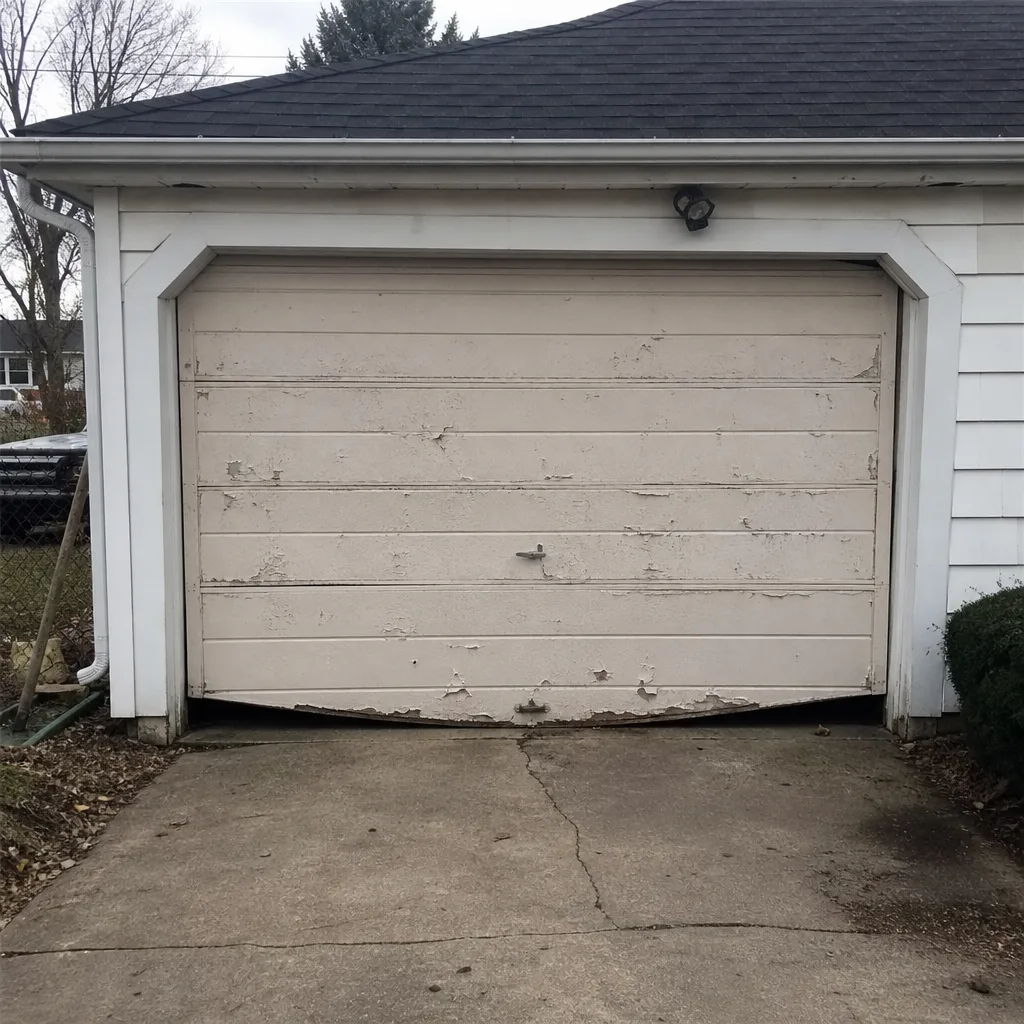 Before
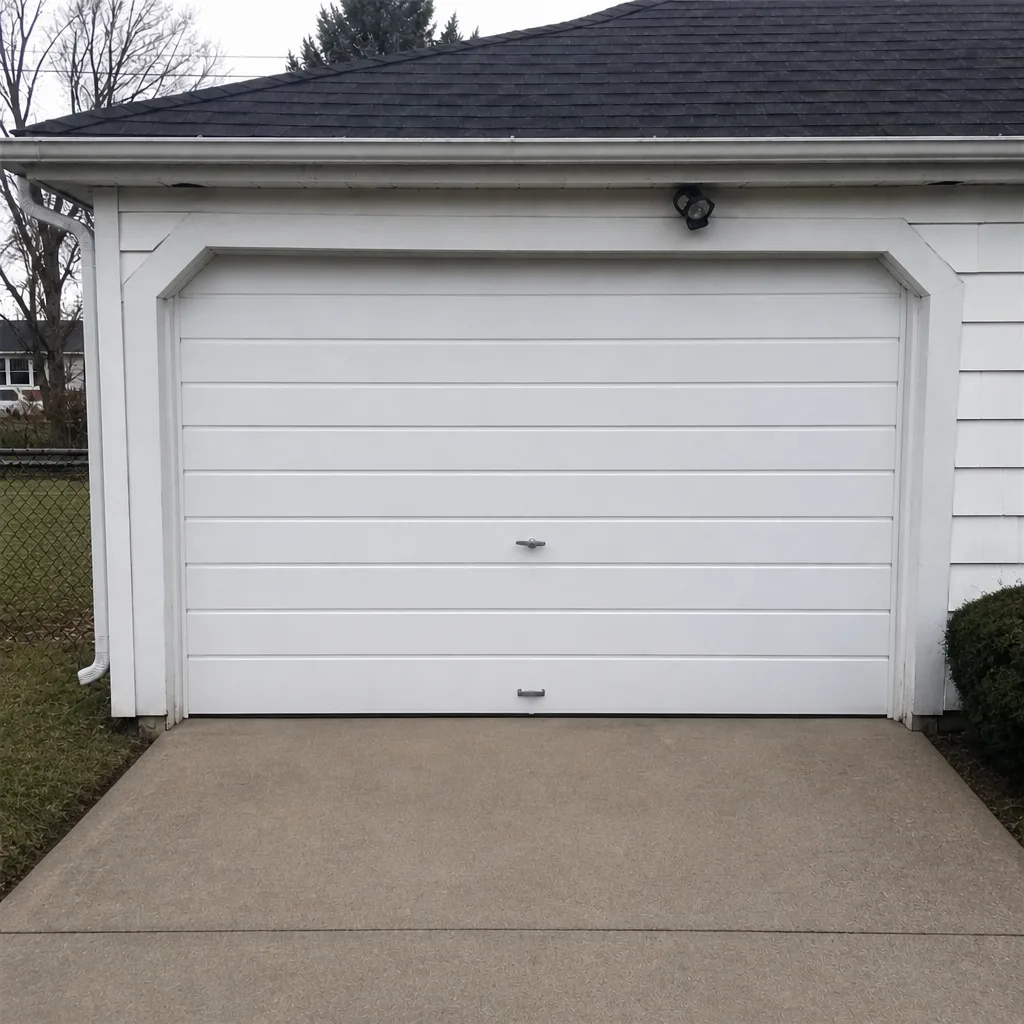 After
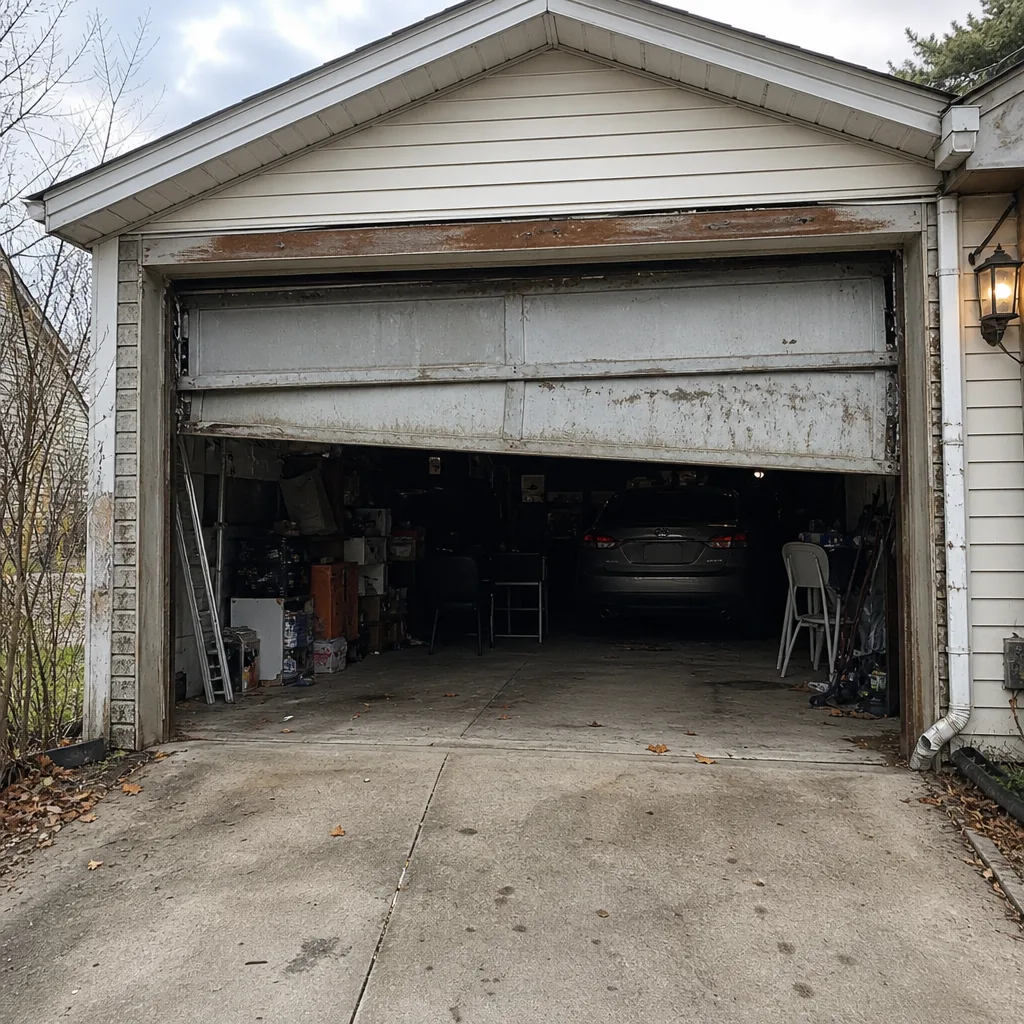 Before
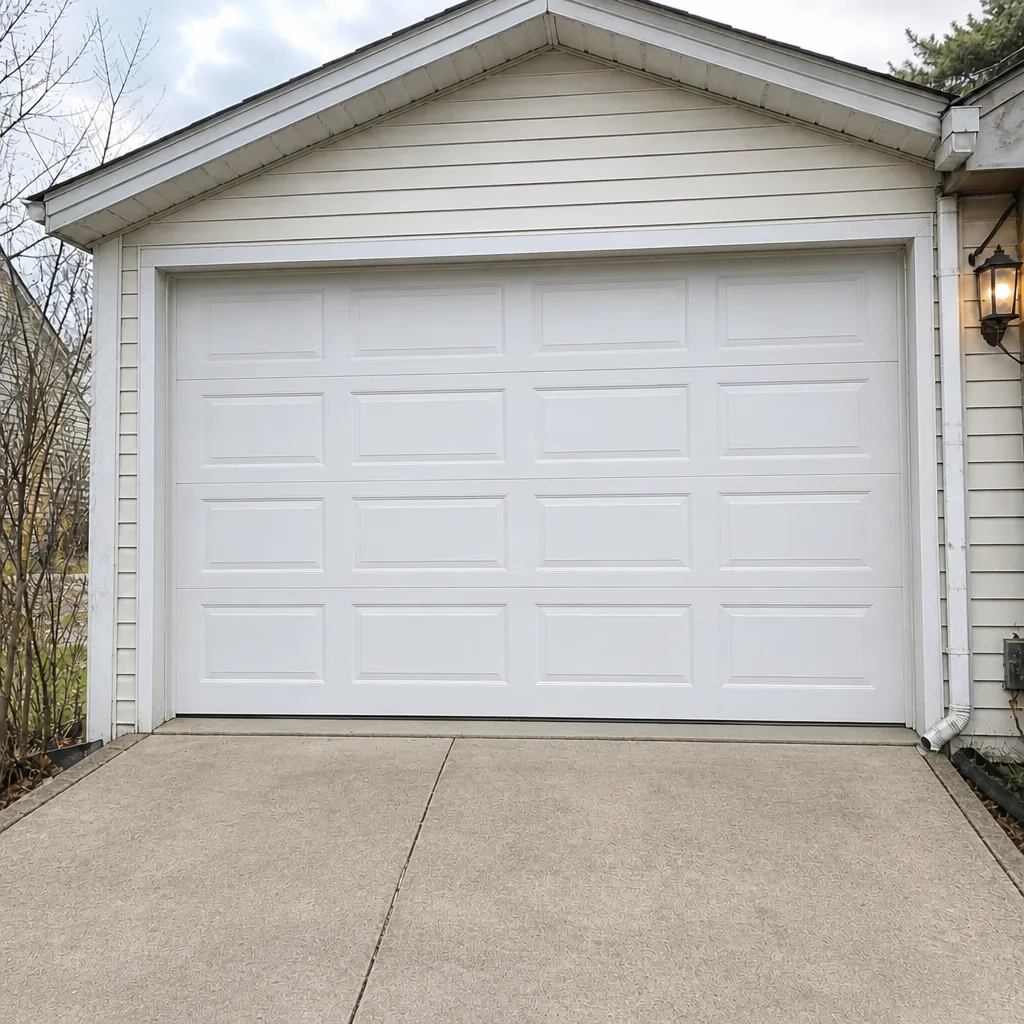 After
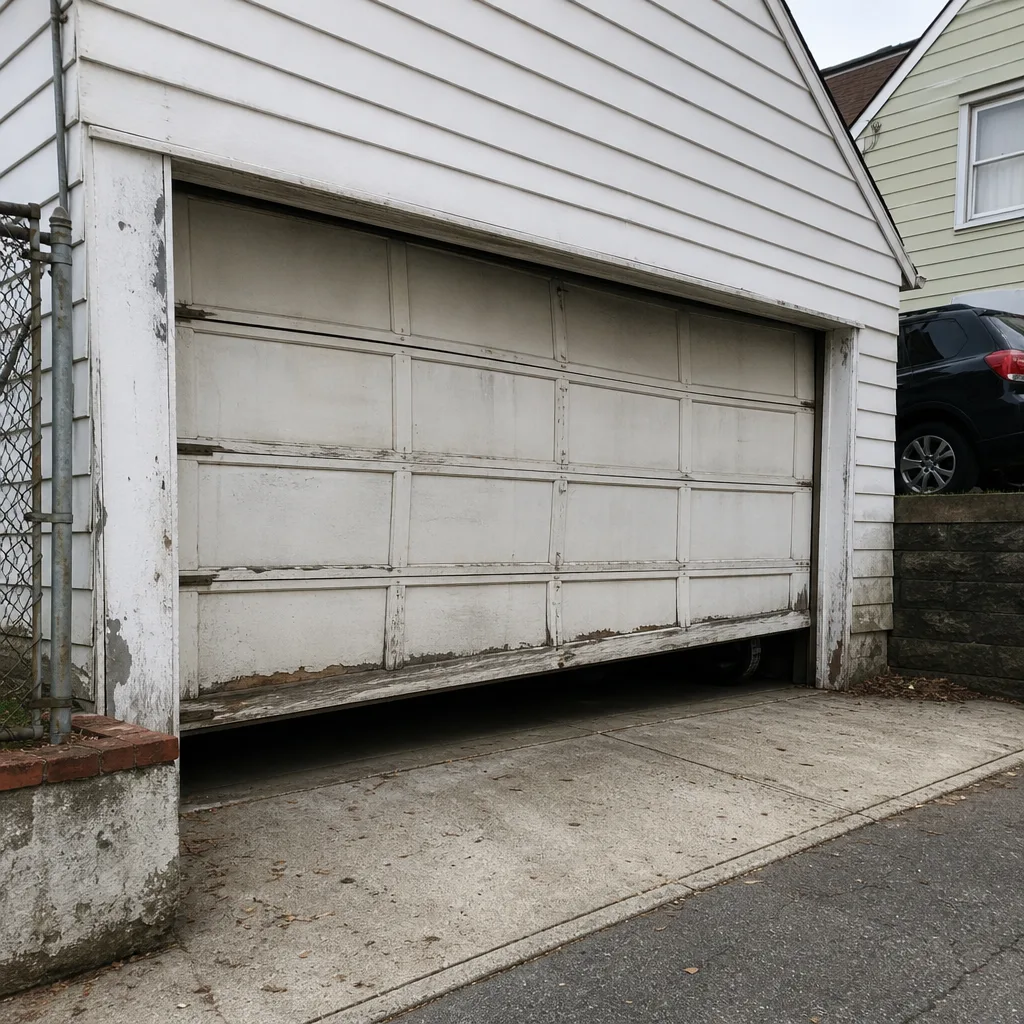 Before
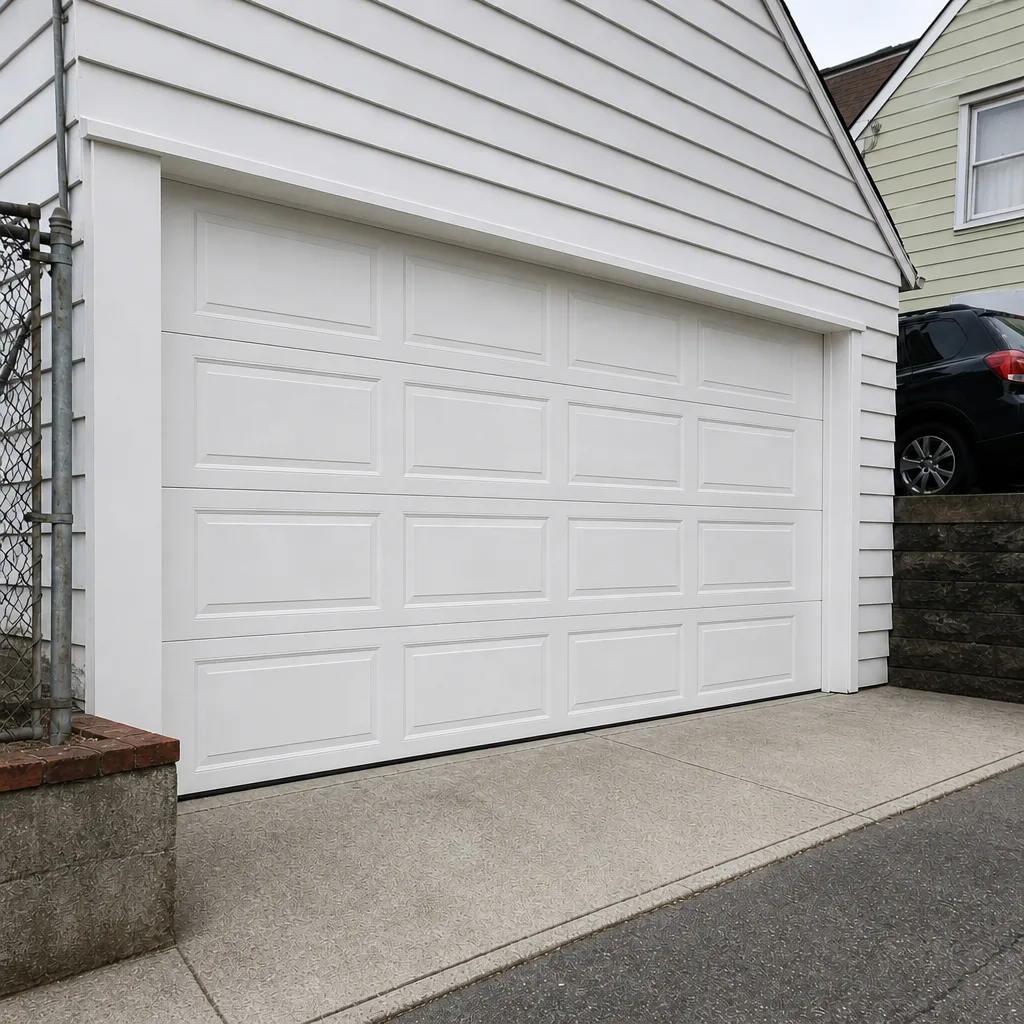 After
When to Call a Professional
Some garage door situations call for a specialist – and quickly.
Call a professional if the door won’t open or close at all, if you hear a loud snap followed by the door not moving (that’s usually a spring – do not try to lift it yourself), if the door is off its tracks, if the opener runs but the door doesn’t move, if the safety reverse fails during a test, or if the door is visibly sagging or unbalanced. Those are all cases where continuing to operate the door risks damage to the assembly or injury to a person.
For ongoing wear – a slow-moving door, a noisy opener, a bottom seal that’s failing, or a door that’s creeping toward the end of its service life – a professional inspection is a cheap way to know whether you’re looking at a repair or a replacement. Garage Door Repair Highbridge offers free estimates in Highbridge – call (833) 508-9256.
Frequently Asked Questions
Usually not, if the replacement is truly like-for-like – same size, same opening, same mounting. Permits become relevant when the work touches structure, changes the opening size, adds electrical, or alters fire separation characteristics. Call the city’s building department to confirm for your specific address.
Like-for-like means the new door matches the old one in size, opening, and mounting, and the assembly’s structural and fire characteristics are unchanged. A different panel style is still like-for-like. A different size or a change to the framing is not.
Yes. Attached garages in NYC residential buildings are held to fire separation standards for the walls, ceilings, and any connecting service door between the garage and living space. This is a separate requirement from the door permit question and should be confirmed with the city’s building department for your building type.
The issue usually surfaces during the buyer’s inspection or title search. It can be resolved before closing with a filing, corrective work, or negotiation – but the earlier it’s addressed, the fewer options you lose. Pull the DOB records and get a specialist’s written scope if the door assembly is involved.
The local professionals we connect you with are licensed and insured as required by their state. Our technicians have up to 14 years of experience working with LiftMaster, Chamberlain, Genie, Clopay, Amarr, Wayne Dalton, Craftsman, and Raynor systems. Call (833) 508-9256 for details specific to your job.
No – the price is quoted and agreed before any work starts, and the written estimate sets the final price. If we find something during installation that changes the scope – unusual framing, hidden damage – we stop and re-quote before proceeding. The number on the estimate is the number you approve.
The Bottom Line
Most garage door replacements in Highbridge don’t need a permit. The exceptions – structural changes, opening-size changes, certain opener installations on manually-operated doors, and any work involving fire separation in an attached garage – are the ones worth getting right before work starts. Bronx borough enforcement has its own rhythm, and unpermitted work tends to surface at the worst possible moment, usually during a sale. Get the scope clear, ask the city’s building department when you’re unsure, and have a garage-door specialist handle the door itself. Springs and cables are dangerous, openers are brand-specific, and installation tolerances matter. One call covers the door, the opener, and the paperwork question – call (833) 508-9256 for a free estimate in Highbridge.
Written by the team at Garage Door Repair Highbridge.