Last updated November 21, 2026
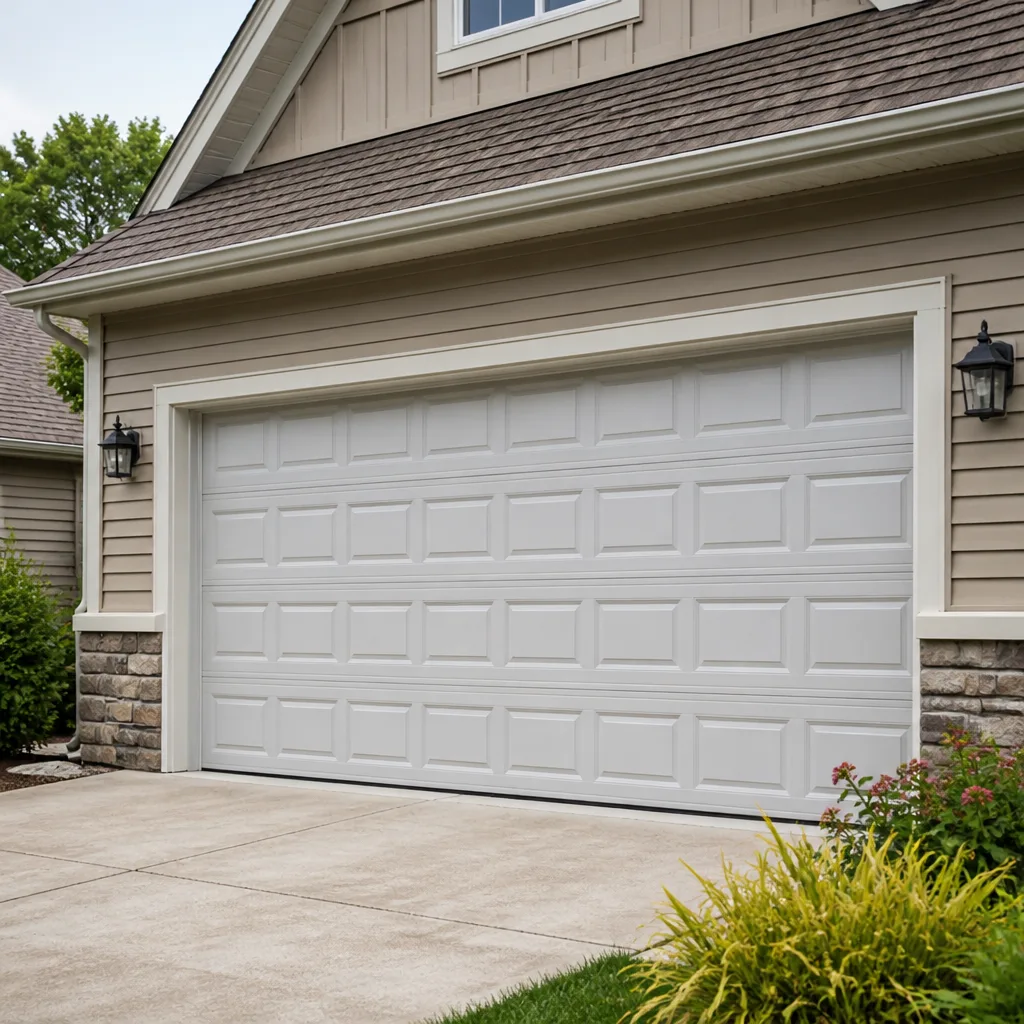 Raised-panel steel
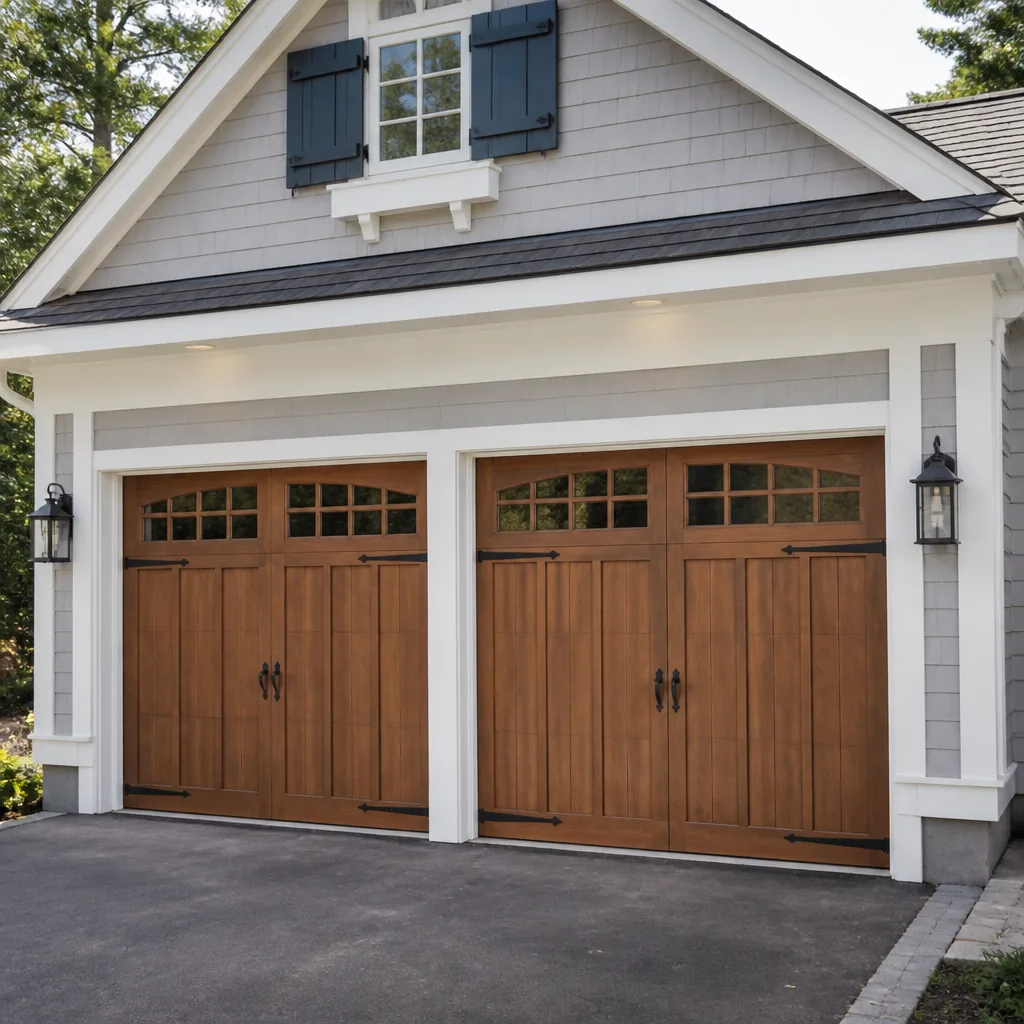 Carriage house
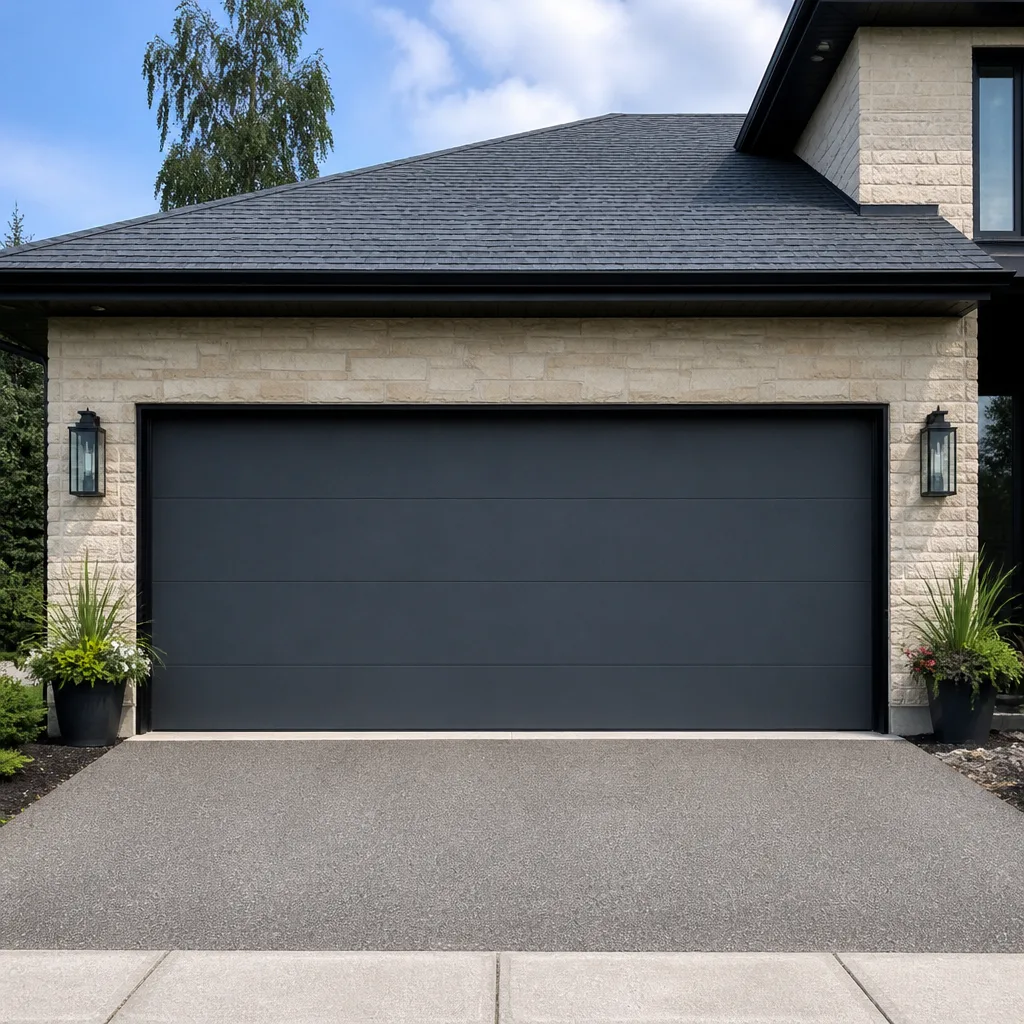 Modern flush
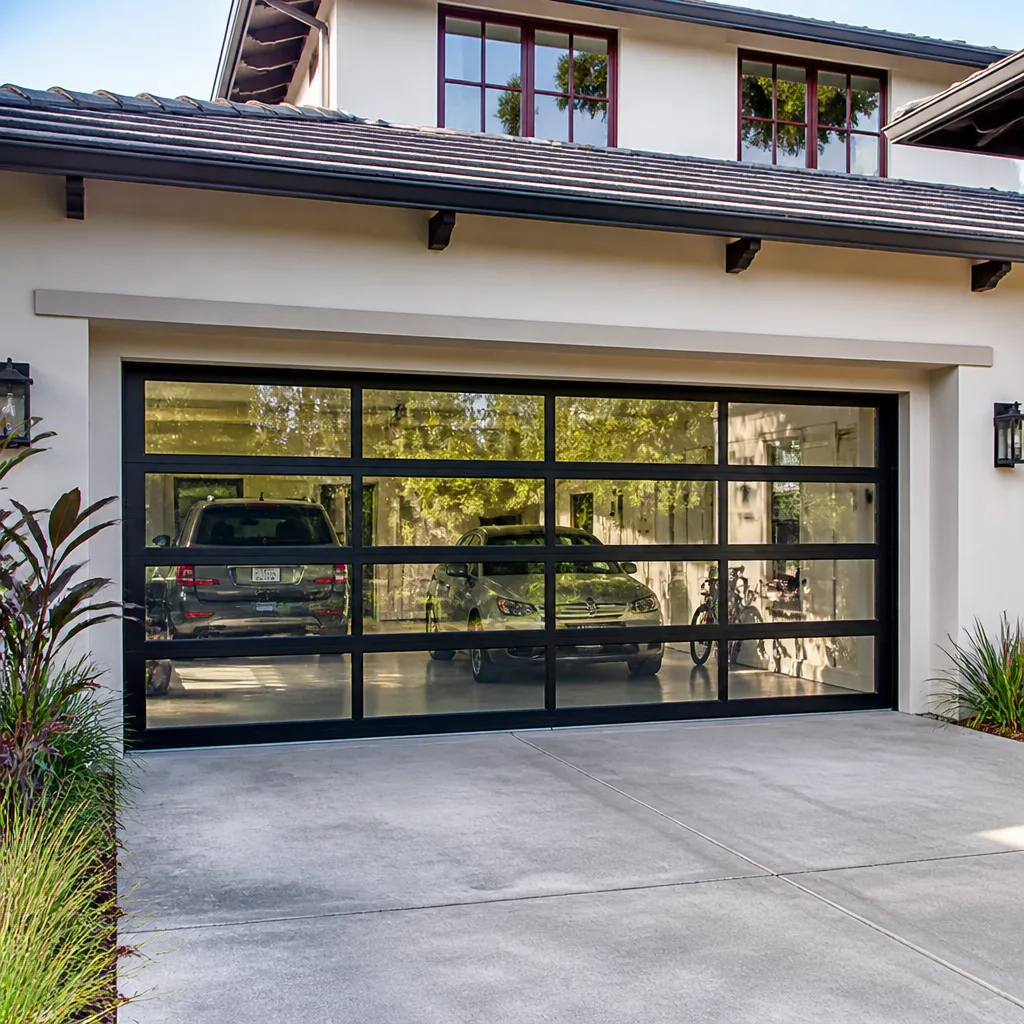 Full-view glass
 LiftMaster openers
 Chamberlain openers
Full 25-point door and opener safety check with every visit - springs, cables, rollers, tracks, and your LiftMaster or Chamberlain opener included
You get a price before we start. It does not change when the pro arrives.
Get your free estimateGarage Door Warning Signs: A Highbridge Homeowner’s Reference Guide
A garage door that’s slow to respond is easy to ignore. A torsion spring under full tension with visible cracking is not – but both look like “the door’s acting weird” to someone who doesn’t work on them every day. That gap in understanding is where small problems become expensive ones. Most Highbridge homeowners aren’t ignoring their doors on purpose; they just don’t have a way to sort the harmless quirks from the ones that need attention now. This guide fixes that. You’ll learn a three-tier urgency system, how to read each sound your door makes, what you can safely inspect from the ground, and the signs specific to older Highbridge garages. By the end, you’ll know exactly which symptoms mean stop, which mean schedule, and which mean relax.
Quick Answer
Garage door warning signs fall into three urgency tiers: stop using the door immediately (snapped or broken springs, fraying cables, a door that’s come off its track, or any door that reverses unpredictably), schedule a repair this week (grinding or popping noises, slow or uneven movement, opener lights flashing error codes, visible roller wear), and monitor and maintain (minor squeaks, cosmetic dents, weatherstripping wear). The tier matters more than the symptom, because the wrong timeline either creates a safety hazard or wastes money on a door that was fine. When you’re unsure, the safest rule is to stop operating the door and get it looked at.
Styles & brands we work with
- Raised-panel steel
- Carriage house
- Modern flush
- Full-view glass
- LiftMaster openers
- Chamberlain openers
Table of Contents
- The Three-Tier Urgency System: Every Symptom Sorted
- Noise Diagnosis: What Each Sound Is Telling You
- Ground-Level Visual Inspection: Springs, Cables, Rollers, and Tracks
- Why a Door That “Works Fine” Can Still Be Failing
- Signs Specific to Aging Highbridge Garages
- Opener Warning Signs and Error Codes
- Repair vs. Replace: Reading the Warning Signs Together
- Seasonal Maintenance for Highbridge Doors
The Three-Tier Urgency System: Every Symptom Sorted
Almost every warning sign belongs in one of three buckets. Sorting the symptom into the right bucket is the single most useful thing a homeowner can do before calling anyone. It tells you whether to stop, whether to plan, or whether to keep an eye on it.
Tier 1: Stop Using the Door Today
These are the conditions where continuing to operate the door risks injury or a much larger repair. Anyone in the household who uses the door should know these on sight.
- A torsion spring with a visible gap or separated coil
- An extension spring that’s stretched out, broken, or hanging loose
- A cable that’s frayed, kinked, or off its drum
- A door that’s come out of its track, even partially
- A door that reverses without command or closes on an obstacle
- A door that’s noticeably crooked or hangs lower on one side
Tier 2: Schedule a Repair This Week
These signs aren’t urgent emergencies but they don’t fix themselves, and they tend to compound. A worn roller becomes a jumping door; a jumping door wears the track; a worn track can pull a hinge loose.
- Grinding, popping, or scraping noises during travel
- Slow response from the opener, or the door stalling mid-travel
- Visible flat spots or chips on rollers
- Loose hinges or brackets that rattle when the door moves
- Opener lights flashing error codes or the door reversing inconsistently
- A remote that works only up close, or works intermittently
Tier 3: Monitor and Maintain
These are cosmetic or minor and won’t damage the door if you note them and watch for changes.
- Faint squeaks or a single soft creak at one point in the travel
- Weatherstripping that’s brittle, torn, or curling at the edges
- Small dents or scuffs that don’t affect operation
- Loose bolts or screws on the opener rail
- Minor paint fade or dust buildup on panels
The best use of this three-tier system is to compare today against last month. A tier 3 squeak that’s been there for years is fine. A tier 3 squeak that appeared last week and is growing louder is drifting toward tier 2. Movement between tiers is more informative than the symptom on its own. If you’d rather have a professional sort it for you, our Garage Door Repair Highbridge team can walk the door and give you an honest read.
Noise Diagnosis: What Each Sound Is Telling You
Noise is the most underused diagnostic tool a homeowner has. Generic advice says “grinding means something’s wrong.” That’s useless. Here’s what each specific sound usually points at – mapped from what we hear when we run a door at the start of a service call.
The Sounds and What They Usually Mean
- A metallic grinding, continuous through the travel: Usually worn steel rollers or a roller that’s lost its bearing grease. On a door with nylon rollers, it’s more often a bent hinge arm putting side pressure on the track.
- A single sharp pop or snap at one point: Often a torsion spring under load, or a hinge that’s pulled loose. Pop, then a sudden slow-down, is a spring problem until proven otherwise.
- A rhythmic clicking or thunking: Usually a roller that’s off its track edge, or a hinge pin that’s backed out. It speeds up with the door and can be traced by watching the rollers travel through the curve.
- A high-pitched squeal or squeak: Almost always friction rather than failure – a dry hinge, a dry roller stem, or a track that’s lightly rusted. This is a lubrication issue most of the time, not a repair. It’s also the one noise in this list that gets noticeably worse in cold weather, then quieter in mild weather.
- A low rattle at the very start or end of travel: The opener rail, a loose bracket, or a traveler that’s working loose. Start here with a visual check on the opener brackets.
- A grinding from the head unit itself, not the door: Gear wear inside the opener. Chamberlain and LiftMaster units, in particular, will sometimes show this with an error code alongside the noise.
- A bang when the door hits the floor: The down limit is set too far. It’s not a failure yet, but the door’s own weight is being driven into the concrete each cycle, and the panels flex under that impact.
One more note: noise that suddenly appears and is loud enough to hear from another room is a different category. Sudden loud noise plus a door that won’t move is almost always a broken spring or a snapped cable. That’s tier 1 – stop using it.
Ground-Level Visual Inspection: Springs, Cables, Rollers, and Tracks
You can learn a lot about a garage door without touching the moving parts or reaching above your head. Here’s what to look at, in order, using only your eyes. Do this standing on the floor, never on a ladder, and never with your hands near the springs or cables.
Springs
Torsion springs run horizontally across the top of the door. Extension springs run parallel to the horizontal tracks on each side. From the ground you’re looking for two things on either type:
- A visible gap in the coil, or a clearly separated section of spring
- A spring that’s stretched longer than its neighbor, or hanging loosely from its bracket
What you can’t see from the ground – and shouldn’t try to reach – is the internal tension on a torsion spring. That’s the reason a spring that looks intact can still fail without warning and why we never ask a homeowner to check by hand.
Safety Caveat on Springs and Cables
Torsion and extension springs are under heavy tension even when the door is closed. The cables that run alongside the door are under that same load. If either fails while someone is in the path, serious injury is possible. Don’t cut, adjust, or unhook a spring or cable yourself, and don’t spray anything into a torsion spring assembly. This is the component that sends more homeowners to urgent care than any other on a garage door. Spring replacement is a job for a trained technician – full stop.
Cables
Cables run from the bottom corners of the door up to the drums above the springs. From the ground, look for:
- Fraying along the wire (a few stray strands at the ends is a warning sign, not just wear)
- Visible kinks or a loop that shouldn’t be there
- A cable that’s come off its drum and is hanging free – stop using the door if you see this
Rollers and Tracks
Rollers sit in the vertical and horizontal tracks. Stand to the side, not in front, and watch the rollers as the door travels. A healthy roller is quiet and round. Watch for:
- Flat spots or chunks missing from the roller face
- Rollers that hop in the track curve rather than gliding through it
- Tracks that are bent, dented, or visibly out of line with the door’s edge
- A gap where the vertical track bolts to the wall bracket
If a visual inspection turns up anything in tier 1, stop the door and get it looked at. For routine sorting on a door that’s already been seen to, our garage door repair team does this walk-through regularly – the full visual inspection is part of a normal service call.
Why a Door That “Works Fine” Can Still Be Failing
This is the part of the guide most homeowners haven’t heard. A garage door can pass the “it opens, it closes” test for months while damage is quietly building. The reason is that most components don’t fail on the cycle they break – they fail on the cycle after a slow decline that started earlier and removed the margin for error.
The Silent Failure Pattern
Three components drive most of this:
- Springs lose tension slowly. A torsion spring loses a small percentage of its stored force over time as the steel fatigues, and the opener compensates without complaint. What changes is the load on the opener. A tired spring means the opener motor is doing work that should be shared, and the motor’s lifespan shortens. By the time the door handles wrong, the opener is often already taking damage.
- Cables stretch. A cable that’s been under load for a long time can lose tension without fraying visibly. That changes the drum alignment and can cause a door to sit slightly off-center, which most people don’t consciously notice.
- Hinges and brackets wear at the screws. The screws in a hinge or bracket loosen fractions of a millimeter per cycle. They don’t announce it. They just get weaker until a screw pulls out and a hinge goes crooked, and then a roller jumps the track.
What to Actually Watch For
Since “it’s broken” isn’t the trigger, look for a change in behavior over weeks, not in a single cycle:
- Slower to open than it was three months ago
- Louder than it was last winter
- The opener running longer than the door travel requires
- The light on the opener dimming or flickering at startup
- A single panel that looks slightly dusty relative to its neighbors (a sign that panel has stopped sealing flat against the others)
This is also why short cycle-time measurements help. A door that goes up in 15 seconds one month and 18 the next is a door whose traveler or limit has drifted. That’s tier 2.
Signs Specific to Aging Highbridge Garages
Highbridge garages have particular characteristics that change what “warning sign” means. Most of the housing stock here has been through many decades of freeze-thaw cycles and, in older detached garages, a certain amount of settled brickwork or masonry around the opening. If your door is attached to a garage of a certain age, these are the signs to add to your list.
Header Sag
The header is the horizontal beam above the garage door opening. When it sags, the opening grows taller and narrower at the same time, and the door loses its square reference. From the ground, look for:
- A visible curve in the header, most visible against a straight edge or line of sight down the wall
- A gap between the header and the door’s top weatherstripping that grows toward one side
- The top door panel barely clearing the header on the up-travel
Out-of-Plumb Openings
An out-of-plumb garage door opening makes the door catch on one track before the other, which causes uneven wear on rollers and one side of the door to sit higher than the other when closed. Check for a light gap at the bottom of the door that’s wider on one side than the other. A plumb opening shows an even gap. A shifting gap that changes with the season is a sign the structure itself is moving.
Deteriorated Masonry Surrounds
Older garages in Highbridge often have a masonry surround at the door opening. Spalled brick or cracking mortar around the door track brackets is a warning sign – not because the track will suddenly fall, but because a bracket that’s lost its firm anchor is a bracket that will eventually work loose. If you can see daylight through a mortar joint near a track bracket, that’s a tier 2 note.
Track Misalignment from Seasonal Ground Movement
Freeze-thaw cycles push and pull concrete slabs and the walls that sit on them. A track that’s fine in July can bind by February. If your door suddenly runs harder once the weather turns, the track may have moved a few millimeters out of line – and this is exactly when our garage door repair team sees the most track calls.
Opener Warning Signs and Error Codes
Opener problems have their own warning set, and they’re often misdiagnosed. The opener is usually blamed for a door problem that’s actually a spring, cable, or track issue. A door that’s labored because a spring is tired will exhaust an opener, not the other way around. That’s why diagnosing the door before the opener saves homeowners a repeat visit.
Opener-Specific Warning Signs
- The opener runs but the door doesn’t move, or moves a few inches and stops. This is usually a stripped drive gear or a broken chain/belt.
- Reverses a foot off the floor and won’t stay down. The down limit is off, or the safety sensors are being triggered.
- Goes up fine but stops on the way down. Often a sensor issue – daylight, dirt on the lens, or a misaligned sensor bracket.
- A single light flash, or an error code pattern on the head unit. Each brand has its own code scheme, and a code doesn’t mean the same thing across brands.
- Works from the wall button but not the remote. Usually a remote battery, a receiver issue, or a rolling-code mismatch.
- Loud grinding from the head unit rather than the door. Gear wear inside the unit.
Brand-Specific Reading
Newer LiftMaster and Chamberlain units share a lot of electronics and error-code patterns. Genie units have their own code tables. A Craftsman opener that’s been in service a long time is usually a rebranded LiftMaster or Chamberlain, so knowing the actual lineage matters. Garage doors and openers are all we do, so we’ve seen every failure mode on these platforms and can read a code in real time. That’s the difference between guessing and getting to the right part on the first visit.
If your opener has been running an intact door but the door has slowed down, get the door checked first. If you’ve replaced the remote batteries and it still won’t respond, that’s a garage door opener repair call – and the sooner the better, because a failing drive gear can damage a good door.
Repair vs. Replace: Reading the Warning Signs Together
Individual warning signs tell you what’s wrong. Reading them together tells you whether the door is worth repairing or whether replacement makes more sense. There’s no single answer, but there are clear patterns.
Usually Worth Repairing
- A single broken spring on an otherwise sound door
- Worn rollers and hinges on an intact door with good panels
- A single bent track section
- One opener component failure on a door in otherwise good condition
- Weatherstripping replacement on a door whose panels are intact
Usually Worth Replacing
- Panel damage on more than one section with visible denting or separation
- A door that’s come off its track and bent the panels as a result
- Repeated spring failures on the same door within a short window
- Header sag that’s made the opening unable to hold a track square (this is a structural repair that may need to happen before or alongside a new door)
- An opener more than about 10 years old that needs a motor or gear repair – at that point, a modern unit with safety sensors freshened up is often the more reliable path
When you’re weighing replacement, our garage door installation team walks through doors from Clopay and Amarr among other brands, so you can compare panel styles, insulation, and opener compatibility in one visit. That’s the benefit of a full-scope specialist – you’re not being pushed toward one answer by a company that only does one thing.
Seasonal Maintenance for Highbridge Doors
Maintenance is the cheapest insurance against every warning sign in this guide. Here’s the priority order, based on what actually prevents failures.
What to Check Each Season
- Balance test (once a season): Disconnect the opener with the manual release, then raise the door to about halfway and let go. A balanced door holds its position or drifts slowly. A door that slams down has a spring that’s lost tension – stop using the door and schedule a visit.
- Reverse test: With the opener reconnected, place a piece of wood or a cardboard box (2 by 4 laid flat works) in the path of the door. The door should reverse on contact. If it doesn’t, the opener’s safety reverse needs adjusting – that’s tier 1, don’t leave it.
- Safety sensor test: Wave an object across the sensor beam while the door is closing. The door should immediately reverse. If not, check for dirt, cobwebs, or a bumped sensor bracket first.
- Visual walkthrough: Run the ground-level spring, cable, roller, and track inspection from earlier in this guide.
- Noise baseline: Listen to the door with your eyes closed for one full cycle. Note any sound that’s new or louder than last month – that becomes your comparison point for the next quarter.
- Lubrication on the safe parts: Hinges, roller stems, and the opener rail get a light application of a proper garage door lubricant (not WD-40, not grease). Springs and cables do not.
None of this replaces a professional tune-up, but it catches the tier 1 and tier 2 signs before they become a tier 1 emergency. In our experience, the doors that fail unexpectedly are often the doors nobody has looked at in years.
Common Mistakes to Avoid
- Assuming a door that opens and closes is a door that’s fine. As the section above this one explains, the slowest-moving damage – spring fatigue and cable stretch – produces no symptom you’d notice until the margin is gone. Watch for behavior change over weeks, not just “it’s broken.”
- Lubricating a spring or cable to quiet a squeak. The squeak is often a hinge or roller. Springs and cables under tension get nothing from a homeowner’s spray can; the outcome can be worse than the noise. Keep lubricant on the hinges and rollers, and leave the springs alone.
- Calling a general handyman first. A generalist can swap a hinge, but a garage door is a mechanism where diagnosis is more than half the work. A diagnosis that misses a fatigued spring, or a door that’s out of balance, produces a repeat visit and often more damage. Garage doors are all we do, which means we’ve seen your problem before.
- Ignoring visible header sag because the door “still opens.” A sagging header changes the geometry of the entire opening. If the door is still working, it’s because the track and rollers are compensating – and they’re doing that by wearing faster. Get the structure looked at before you replace the door.
- Replacing the opener to solve a door problem. A labored door is almost never an opener problem. If the door is dragging or the opener is running longer, get the door itself checked. A new opener on a straining door just wears out a new opener.
- Continuing to use a door with a broken spring “because it’s only one side.” On a two-spring door, a single broken spring puts the full door load on the other spring and every other component. Continuing to operate it accelerates the failure of everything else.
- Skipping the balance test because it’s fiddly. It’s the easiest test on the list, and it catches spring fatigue before any other symptom shows. One minute, once a season.
See the difference
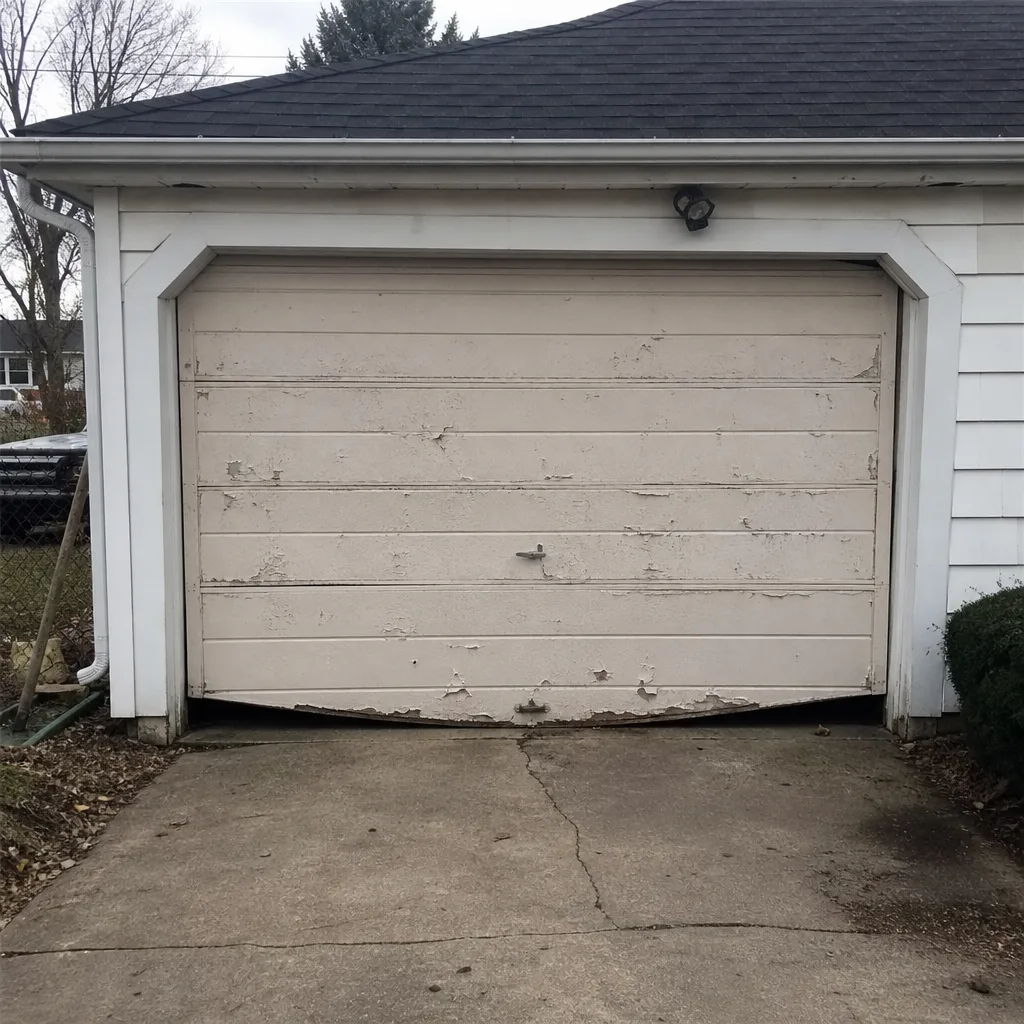 Before
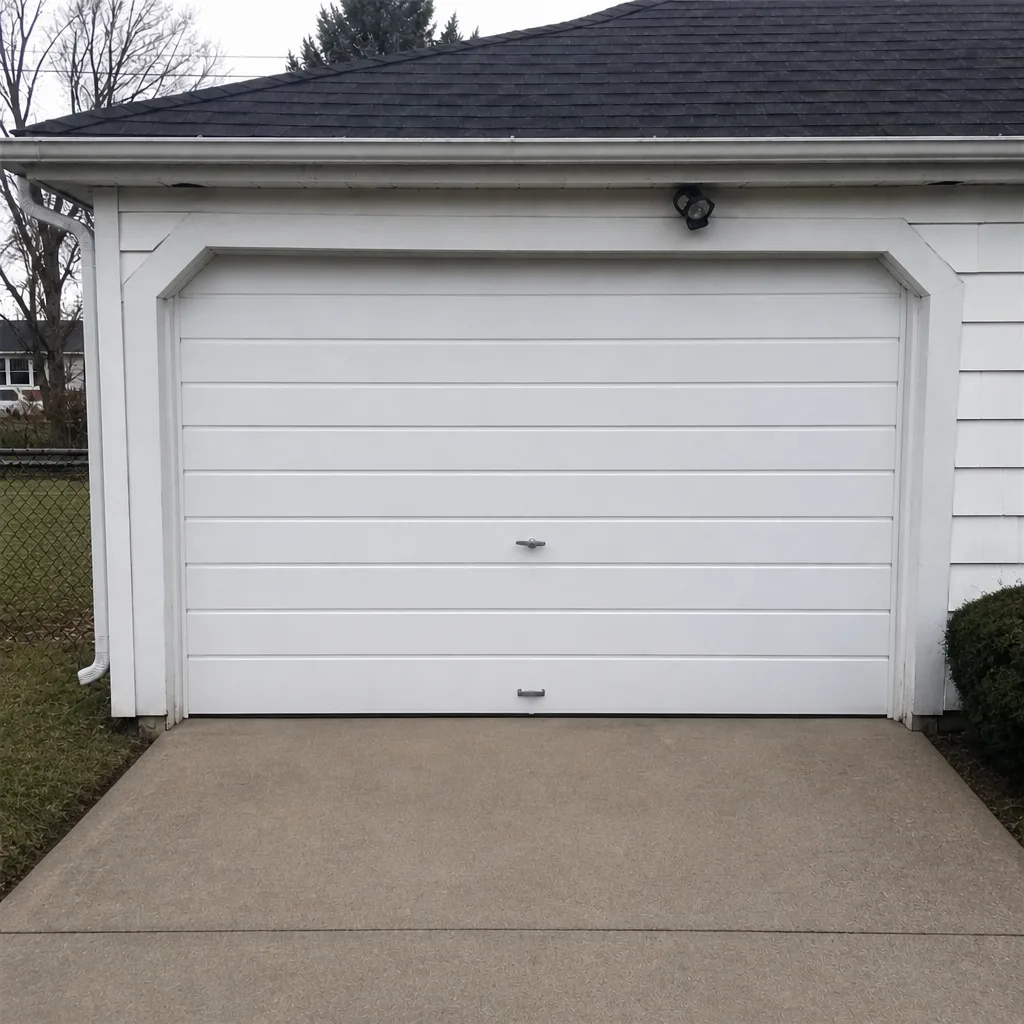 After
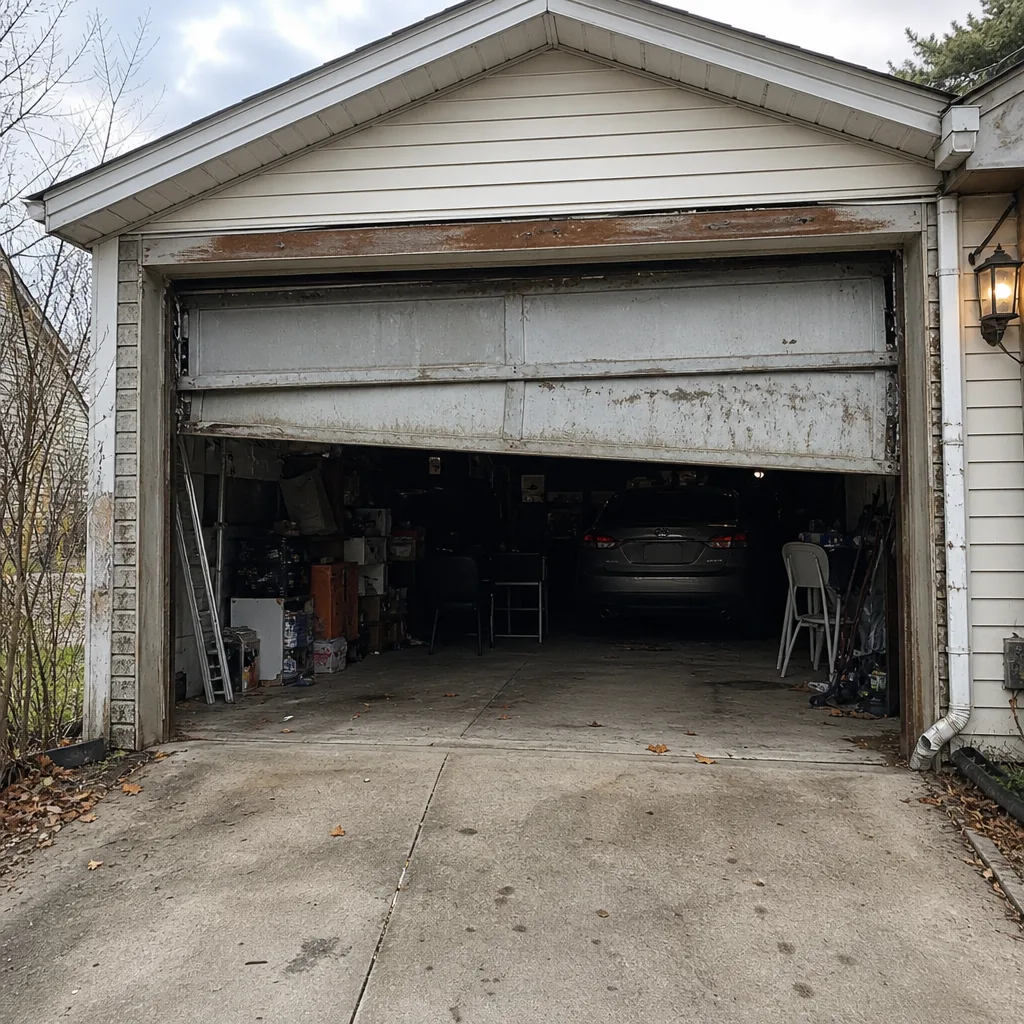 Before
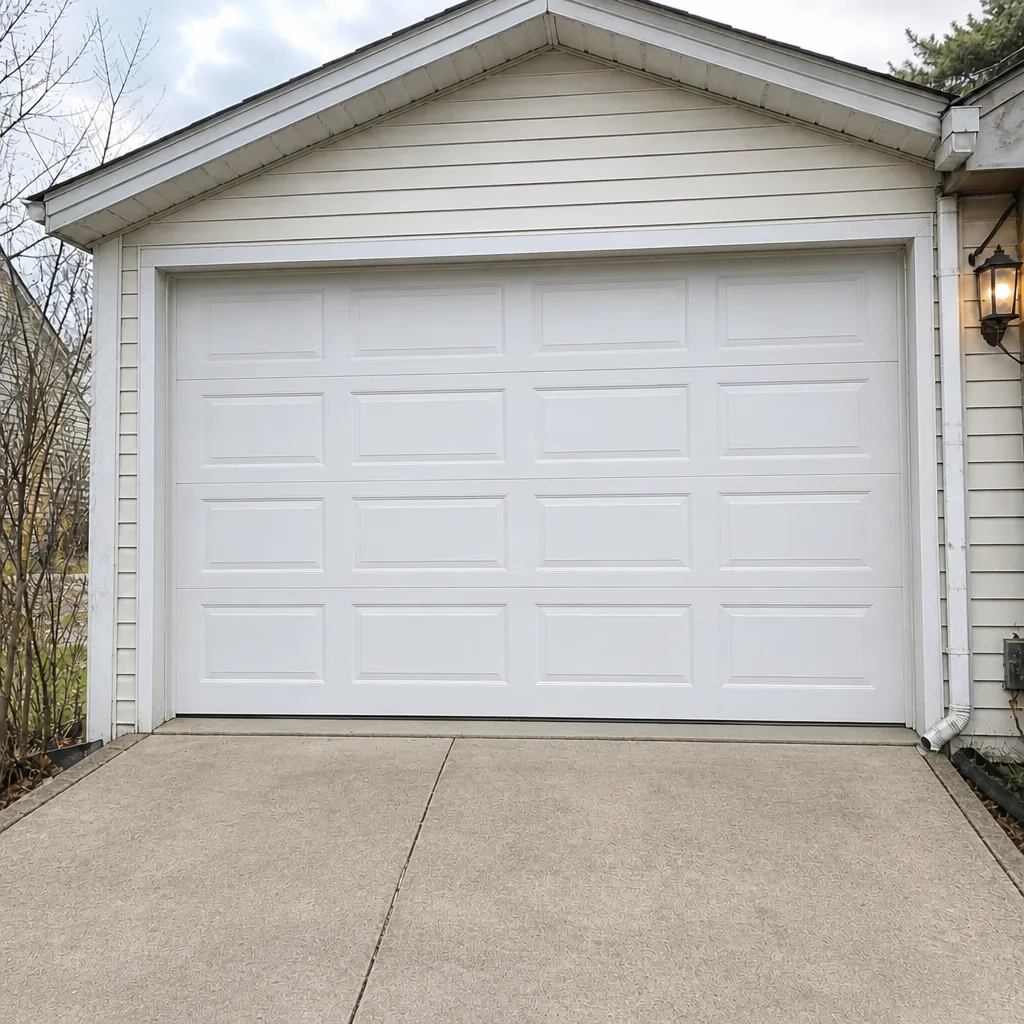 After
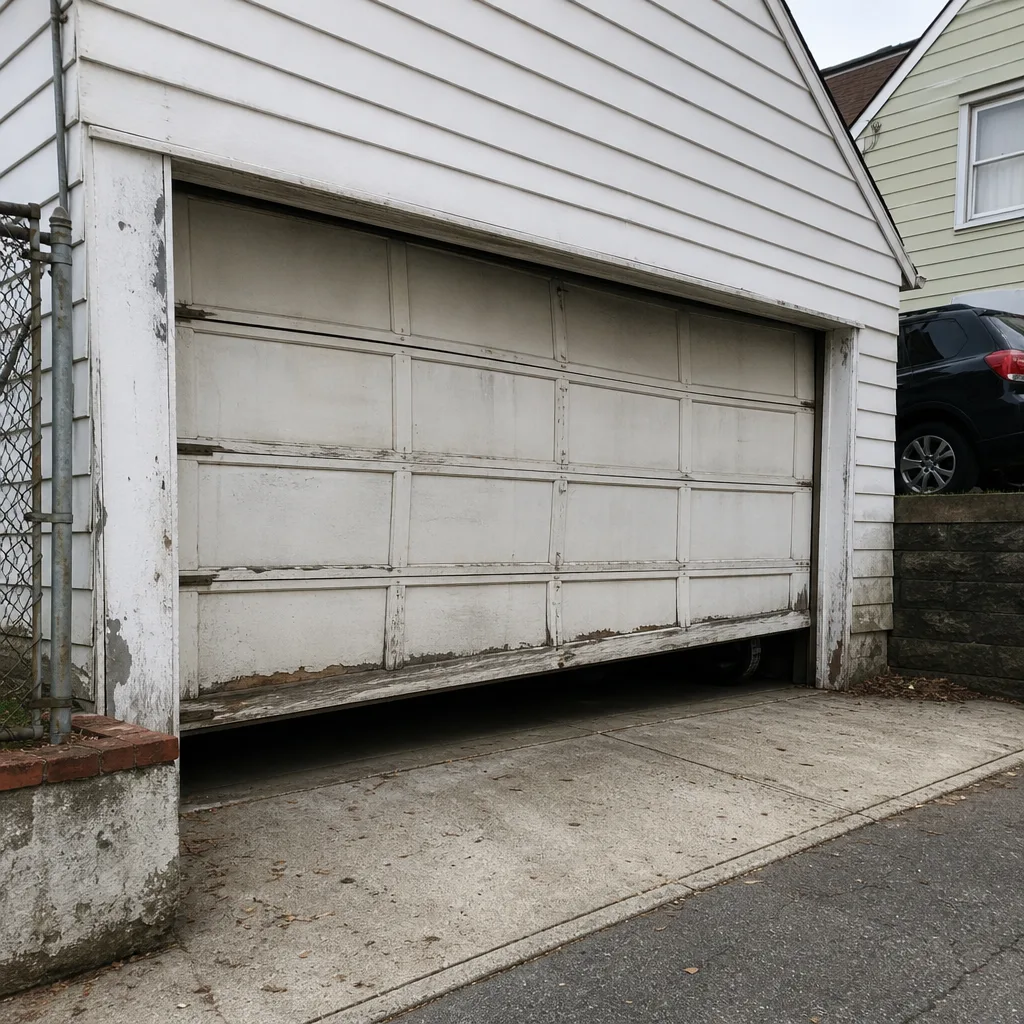 Before
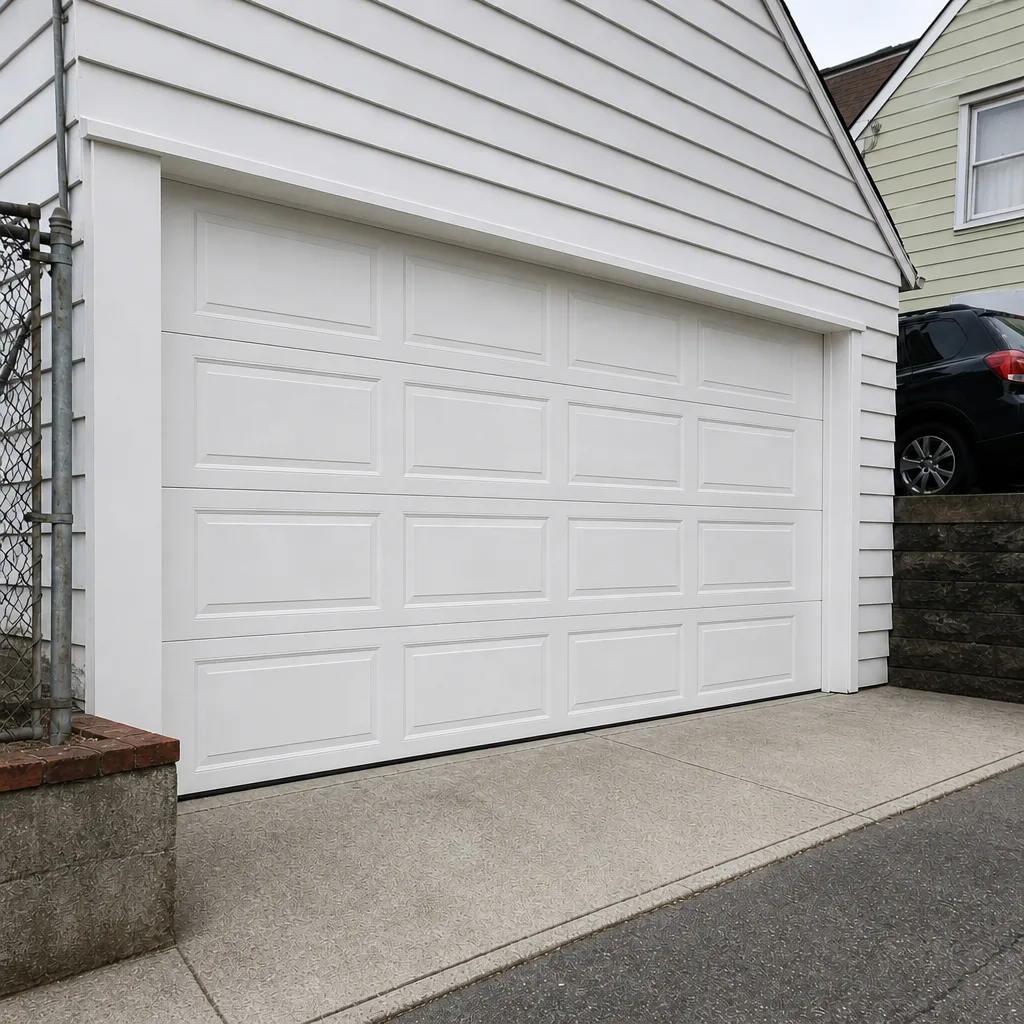 After
When to Call a Professional
Call a professional the moment a warning sign lands in tier 1. Broken or separated springs, frayed or off-drum cables, doors out of the track, unpredictable reversal, or a visibly crooked door – those are same-day decisions, not next-month decisions. A torsion spring that’s failed is under no less tension than it was the cycle before, so a partial failure is a live hazard. Tier 2 signs – persistent noise, slow response, worn rollers, flashing error codes – want a scheduled visit within the week, before they compound into a tier 1 repair. If you’re not sure which tier a sign belongs to, the safer interpretation is the higher one.
Garage Door Repair Highbridge offers free estimates in Highbridge. Our technicians have up to 14 years of experience, and we work with the major brands homeowners actually own – LiftMaster, Chamberlain, Genie, Clopay, Amarr, Wayne Dalton, Craftsman, and Raynor – so diagnosis is accurate and the parts fit the first time. Call us at (833) 508-9256 for a free estimate, or ask for an emergency visit if the door is in a tier 1 state. We also handle full-scope work in Highbridge, so repair, opener service, spring replacement, and new door installation all happen under one company. When the spring fails at 11 PM, the same number gets you to a live call.
Frequently Asked Questions
A broken or separated spring is the most urgent warning sign, followed closely by a frayed or off-drum cable. Both are under high tension and can cause injury if the door is operated. Stop using the door and call (833) 508-9256 for an emergency visit.
A broken torsion spring usually shows a visible gap or separated coil across the top of the door, while a broken extension spring hangs loose or stretched out on its side. If the door won’t lift, lifts a few inches and stops, or feels like the opener is doing all the work, spring failure is the most likely cause. Our garage door repair team can confirm on a free estimate.
No. A door that squeaks at a dry hinge or a lightly rusted track is usually a lubrication fix, not a repair. What you should pay attention to is a sound that’s new, louder than it was last season, or changes its pattern mid-travel. Sudden loud noise plus a door that won’t move is a tier 1 spring or cable failure – stop using the door.
No, and it’s not a close call. Torsion springs are under heavy tension even when the door is closed, and the tools that safely release that tension are a specific set no homeowner needs to buy. Spring replacement is a job for a technician. Our spring service is a dedicated part of what we do because it’s the most dangerous homeowner repair on a garage door.
That depends entirely on the tier. A tier 1 sign (broken spring, frayed cable, out-of-track door) means stop using it now. A tier 2 sign (persistent noise, slow response, worn rollers, flashing codes) should be scheduled this week. A tier 3 sign (faint squeak, minor scuff, brittle weatherstripping) is a monitor-and-maintain item. If a symptom is worsening week to week, treat it as one tier higher than where it started.
Older Highbridge garages tend to show header sag, out-of-plumb openings, and deteriorated masonry or mortar near track brackets, and those warning signs occur above and around the door rather than in it. The door can be working fine while the opening itself is failing, and the door tracks and rollers are what compensate. If you notice a light gap at the bottom of a closed door that’s wider on one side, or a seasonally shifting gap, get the opening inspected before you invest in a new door.
Yes. Emergency garage door service is part of what we do, not a marketing add-on. If the door won’t open and you’re blocked in or out, or a spring has failed, call us at (833) 508-9256. We also handle opener problems, track issues, and full door replacement in Highbridge, so one call covers the whole job.
The Bottom Line
Every garage door warning sign sits in one of three tiers. Sorting the sign before you act is the whole point of this guide. Springs, cables, out-of-track doors, and unpredictable reversal are tier 1 – stop using the door and get a professional involved the same day. Persistent noise, slow response, worn rollers, and opener error codes are tier 2 – schedule a visit this week, before they compound. Faint squeaks and cosmetic wear are tier 3 – note them, watch for change, and keep them in perspective. Older Highbridge garages add a fourth layer: header sag, out-of-plumb openings, and aging masonry around the door, which can fail above a door that’s still working. Free estimates are always available, and the written quote is the price before any work starts. Call (833) 508-9256 if something looks wrong and you’d rather have it looked at today.
Written by the team at Garage Door Repair Highbridge.